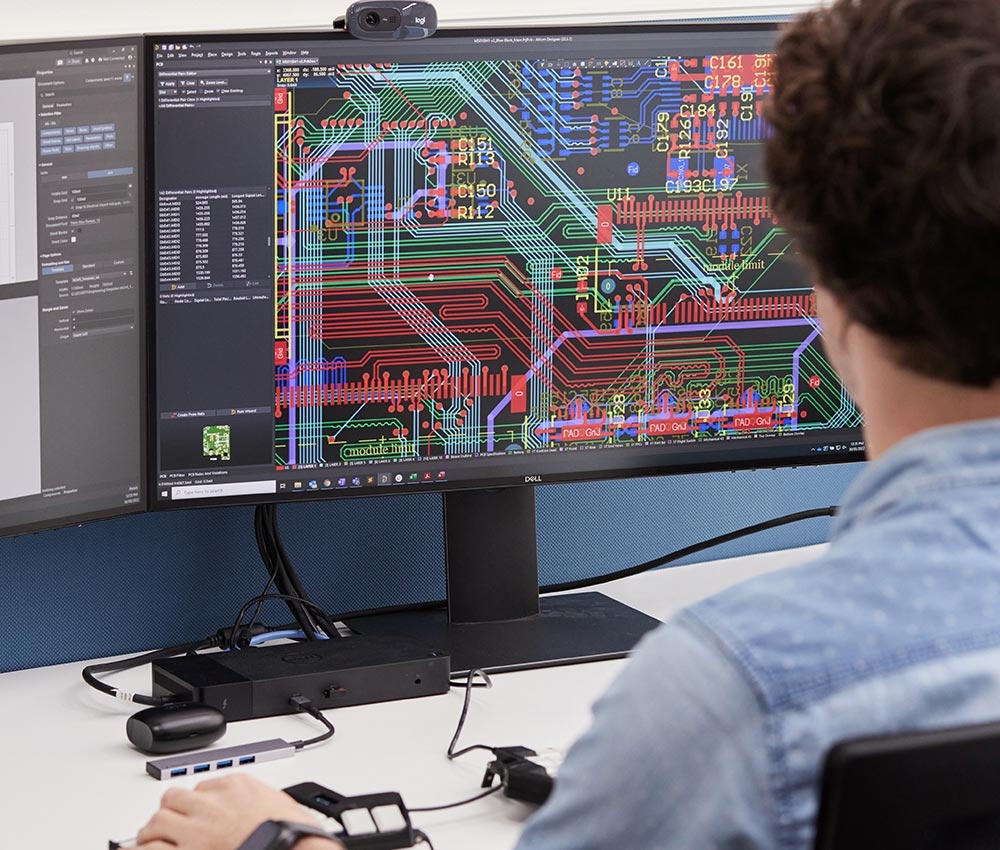
Designing for Reality: Why Exa Partners with Entech Electronics

A manufacturer’s job doesn’t start when the design files arrive.
For Entech Electronics, some of the most important manufacturing decisions happen long before a product reaches the production line.
There are plenty of manufacturers that can assemble electronics; Entech’s focus is helping clients successfully commercialise products.
Successful commercialisation requires looking beyond whether something can be built and asking bigger questions. Will it be reliable? Can it be manufactured efficiently at scale? Is the supply chain resilient? Will the product be supportable years from now?
For Entech, success is not measured by a shipment leaving the factory. It’s measured by whether the client’s product succeeds in the market.
More Than Manufacturing
Entech believes one of the most underestimated parts of manufacturing is the value that can be created before production begins.
A small design change made early might remove unnecessary manufacturing cost, improve reliability, shorten lead times, simplify testing, or prevent a future supply issue.
The same change made after tooling is complete or production has started can be far more expensive to resolve.
That is why Entech encourages development teams to engage manufacturing expertise as early as possible.
Through Design for Manufacture (DFM), Design for Test (DFT), component selection, supply chain planning, and production strategy, Entech helps identify risks while teams still have the flexibility to address them.
The goal is not to change a design for manufacturing’s sake, it’s to help create a better product.


Experience You Can’t Find on a Drawing
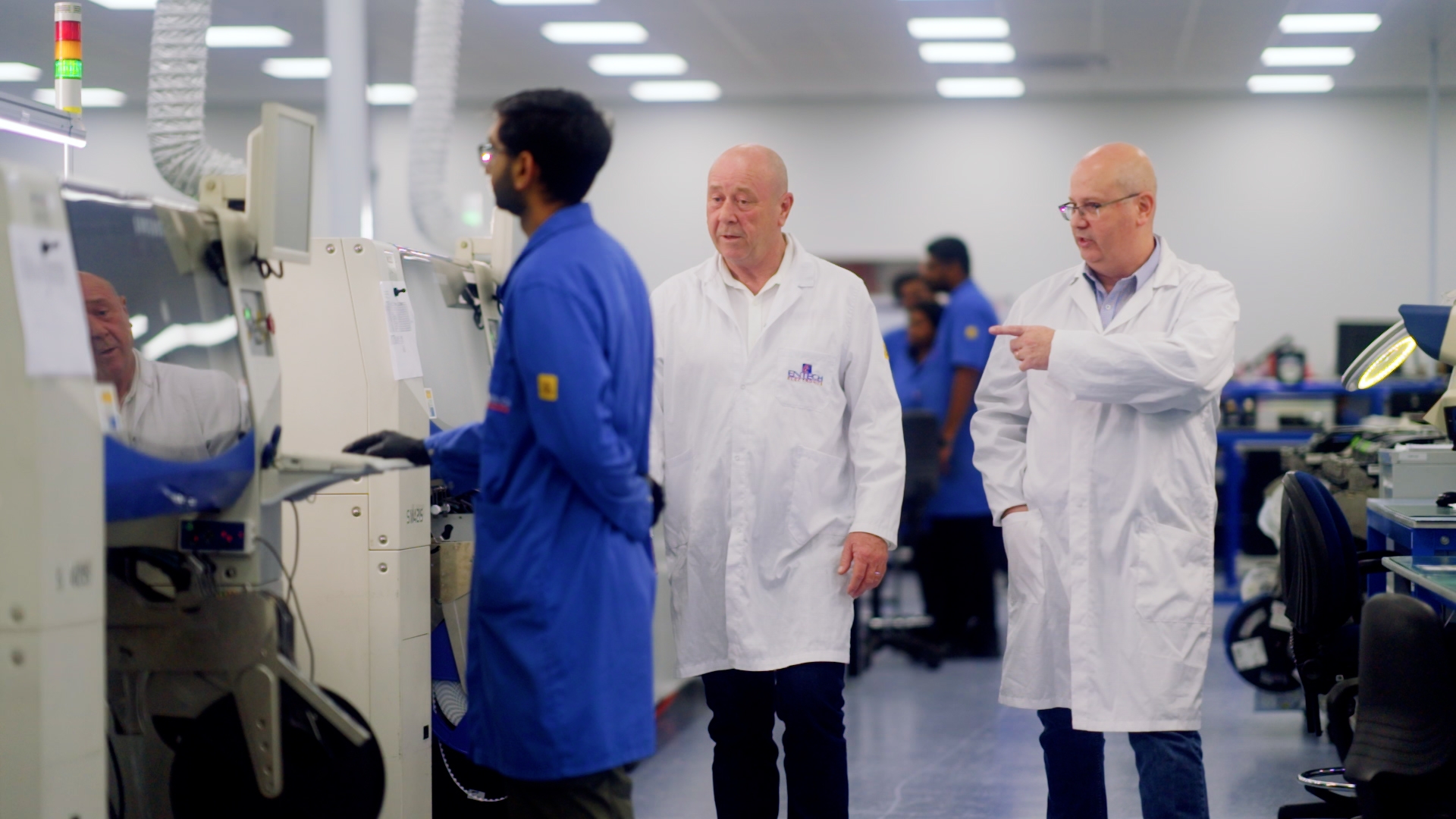
Some of Entech’s most valuable knowledge comes from people who have spent decades on the factory floor.
Many of its engineers and operators have more than 20 years of hands-on production experience. They have seen the same manufacturing challenges and opportunities play out across hundreds of products.
A design can look flawless on paper and still create problems in production. An experienced operator or manufacturing engineer may spot an issue in an assembly process, component selection, tolerance, or test approach long before it becomes costly.
Entech sees that practical insight as one of its greatest strengths and a critical part of its DFM capability.
It also reflects a broader belief within the business: the best products come from bringing different forms of expertise together early and creating an environment where people are comfortable speaking up. If teams do not gel, some of the best ideas can remain unsaid.
Because sometimes the most valuable contribution to a project is not a new idea. It is identifying a problem before anyone else sees it.

Seeing The Risks Others May Miss
Supply chain is one area Entech believes product teams can underestimate.
A component may be technically ideal yet introduce significant commercial challenges if it has a long lead time, limited availability, an approaching end-of-life date, or a single source of supply.
Manufacturability can present similar challenges.
Entech spends considerable time understanding how a product will be built and tested, looking for opportunities to improve quality, consistency, efficiency, and long-term production outcomes.
Sometimes the changes are small, but their impact is not.
A different component, a simplified assembly, or a change to the way a product is tested or built can significantly improve manufacturability and reliability, reduce production risk, and determine whether a product can be manufactured commercially at scale.
When manufacturing expertise enters the process too late, those opportunities are often harder and more expensive to realise.
Entech has seen products require PCB redesigns, enclosure modifications, or component substitutions after engineering was effectively complete because manufacturing requirements were not considered early enough.
Many of those issues are avoidable.
DFM is a Design Discipline
This is why Entech takes a strong view on Design for Manufacture.
DFM should not be treated as a final review once development is complete. It should be embedded throughout the design process.
When manufacturing knowledge is introduced early, teams can make decisions with a clearer understanding of how those choices will affect production, cost, quality, reliability, supply, and scale.
For Entech, DFM is a fundamental design engineering discipline. The best products come from recognising that design and manufacturing are not separate stages, but interconnected parts of the same development process.

Making better trade-offs
Every product involves compromise.
Performance, cost, reliability, manufacturability, component availability, and time-to-market rarely move in the same direction.
One of Entech’s key roles is helping clients navigate those trade-offs with a clear understanding of the risks and opportunities.
Sometimes spending slightly more on a component improves availability and long-term product support. In other cases, simplifying an assembly can reduce cost while improving quality and consistency.
Good engineering is rarely about finding a perfect solution.
It is about understanding the options, weighing the trade-offs, and making informed decisions based on what matters most for the product, its users, and the market.
When Clients Become Part of The Team
The projects that energise Entech most are those where the relationship feels less like customer and supplier and more like a shared team.
The strongest outcomes come from open communication, mutual trust, and a willingness to have honest conversations early.
When clients bring Entech into the process, its engineers, production specialists, and supply chain experts become invested in the success of the product, not just the manufacturing outcome.
There is real satisfaction in solving complex challenges together and seeing an idea progress from concept to commercial reality.
That collaborative mindset is also central to Entech’s relationship with Exa.
Complementary Expertise
Entech and Exa work well together because both businesses approach product development as a collaborative process.
Exa brings expertise in product design, user-centred development, and engineering, helping clients define the problem and create thoughtful product solutions.
Entech brings the manufacturing capability needed to ensure those products can be built reliably, repeatedly, and commercially at scale.
Importantly, Exa doesn’t treat manufacturing as an afterthought.
That allows manufacturing insight to shape development while decisions are still being made, rather than after a product is considered finished.
It’s in the overlap between design and manufacturing that both teams see the greatest opportunity to create value.
A Shared Standard
There’s also a strong cultural alignment between the the two businesses.
Both believe in thoughtful engineering, honest advice, and doing what is right for the client, even when that means asking difficult questions or challenging assumptions.
Neither is interested in taking shortcuts simply to move a project forward, and both choose to work on projects where they believe their expertise can add genuine value.
That shared approach gives clients access to complementary expertise across design, engineering, and manufacturing, and most importantly, specialists working towards the same outcome.
It also reflects something important about Australia’s product development ecosystem: the best outcomes come from connecting specialised expertise and bringing the right partners together at the right time. While deeply rooted in Australia, Entech extends that capability globally through its manufacturing facilities in Adelaide, Shenzhen, and Penang, with additional support across New Zealand and the UK.
Because successful commercialisation is not about designing a product first and figuring out how to manufacture it later.
It is about bringing together the right expertise, local knowledge, and global capability to reduce risk, make better decisions, and create products ready to succeed in the world.